Search
 Message

Company News
Emergency measures for maximum speed noise of cylindrical roller bearings
Edit:Shandong Hanai Bearing Co., Ltd.Time:2025-12-31
There are many causes for the failure of cylindrical roller bearings. In addition to normal bearing fatigue spalling, factors such as seal failure, excessively tight fits leading to insufficient bearing clearance, or poor lubrication can leave specific failure marks and modes. Therefore, inspecting bearing failures can often identify the root cause of the malfunction, allowing for timely measures to be taken for prevention.
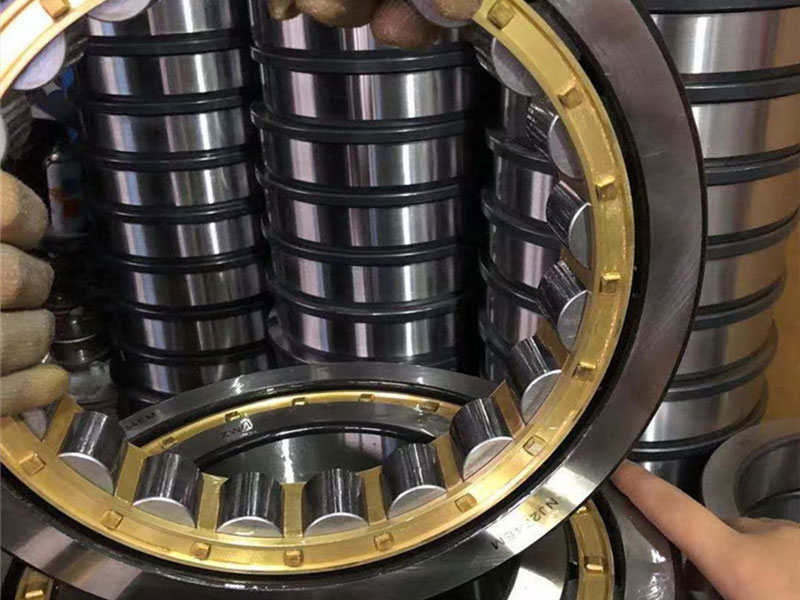
Generally speaking, 1/3 of bearing failures occur because the bearing has reached its fatigue spalling period, which is considered normal failure; 1/3 fail prematurely due to poor lubrication; and 1/3 fail prematurely due to contaminants entering the insert bearing (spherical outside surface bearing) or incorrect installation. Generally, when a bearing is operating abnormally, it exhibits the following seven common symptoms: Bearing overheating, excessive bearing noise, low bearing lifespan, high vibration, failure to meet machine performance requirements, bearing looseness on the shaft, and difficulty in shaft rotation.
Raceway Sound and Control Methods
Raceway sound is a smooth, continuous sound emitted by the rolling elements rolling on the raceway surfaces when cylindrical roller bearings (Type 2 bearings) are in operation. It is a characteristic fundamental sound inherent to all rolling bearings. Generally, the sound of an insert bearing is the combination of raceway sound and other noises. The raceway sound of a bearing is irregular, with a frequency above 1000Hz. Its main frequency does not change with rotational speed, but its total sound pressure level increases as speed accelerates. For bearings with loud raceway noise, the sound pressure level decreases as viscosity increases; whereas for Type 2 bearings with low raceway noise, the sound pressure level decreases initially but starts to increase when viscosity exceeds approximately 20mm2/s. The greater the rigidity of the bearing housing, the lower the total sound pressure level of the raceway sound. If radial clearance is too small, the total sound pressure level and main frequency of the raceway sound increase sharply as radial clearance decreases. Methods to control raceway sound include: selecting low-noise bearings (i.e., those with minimal waviness) and carefully choosing operating conditions. Raceway sound often affects the overall noise of the machinery; reducing raceway sound can therefore reduce the overall noise of the machinery.
Rolling Element Impact Sound and Control Methods
Larger-sized bearings or insert bearings operating at low speeds under pure radial loads may generate noise because rolling elements in the non-loaded zone impact the cage or raceways due to low centrifugal force. However, this sound disappears as rotational speed increases. Methods to control rolling element impact sound include: appropriately reducing radial clearance and using Type 2 bearings with cages of reasonable structure and compliant materials.
Bearing Rolling Sound (Skidding Sound) and Control Methods
Rolling sound is a harsh metallic friction noise that can occur in bearings under various conditions. It mostly occurs in larger-sized bearings with grease lubrication, particularly when the base oil properties of the grease have deteriorated, and rarely occurs with oil lubrication. Furthermore, it is more likely to occur in winter. When subjected to pure radial loads, it tends to occur when radial clearance is large. Depending on the bearing size, it is prone to occur within a specific speed range, appearing either continuously or intermittently. Special processing methods applied to the outer ring raceway can prevent the occurrence of rolling sound; if necessary, such insert bearings should be selected. Alternatively, radial clearance can be appropriately reduced, high-performance grease can be used, and the rigidity of the mating components can be improved.
 15266899192